
Foam Fire Extinguishers
Buy foam fire extinguishers for Class A and Class B fire risks, from compact 2 litre units to 50 and 100 litre wheeled foam units. A foam extinguisher cools burning solids and forms a blanket over burning liquids, so one unit covers...
- Same day dispatch on Poole stock
- Genuine, brand new stock
- Trade prices with a trade account
- Expert help 0113 518 0540







About Foam Fire Extinguishers
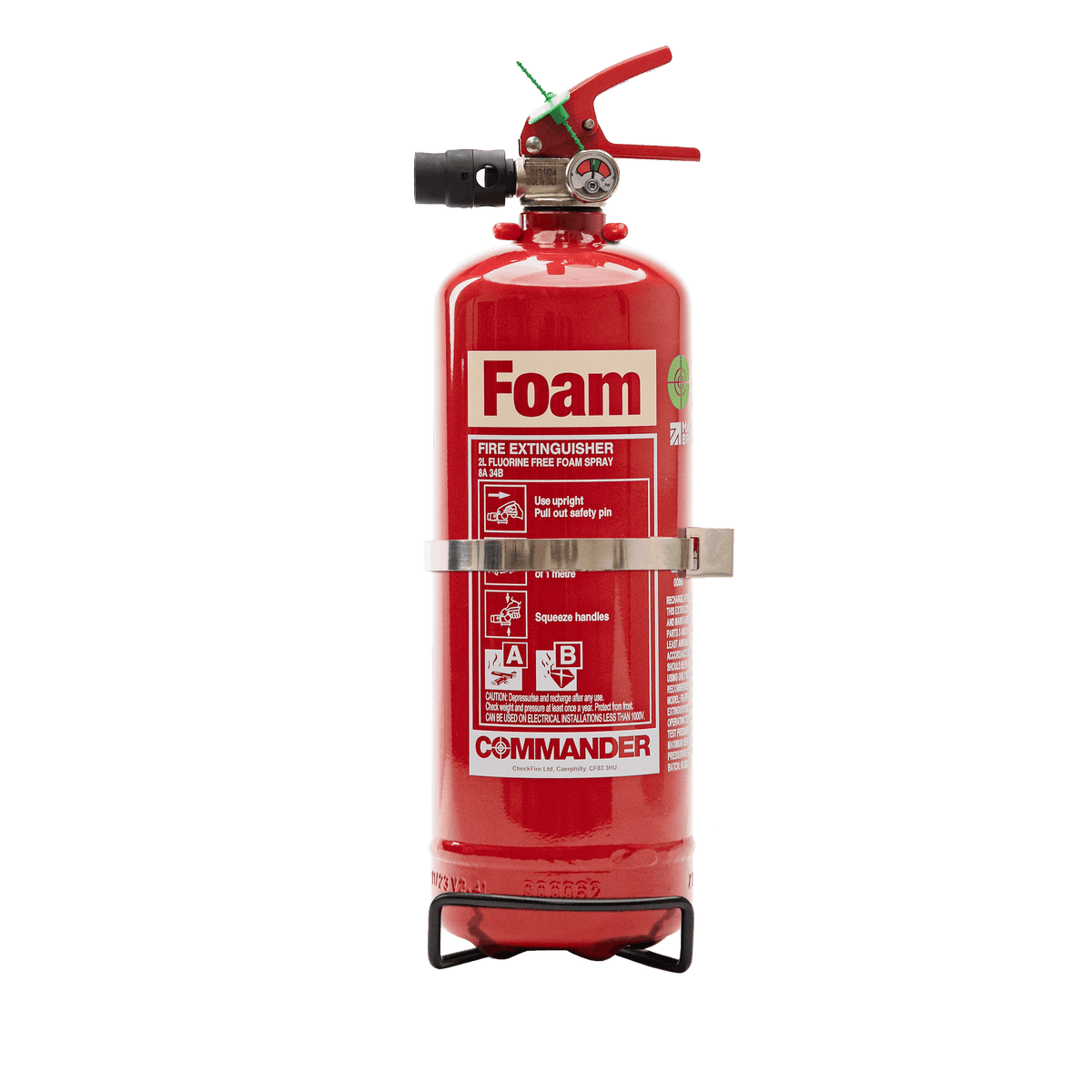
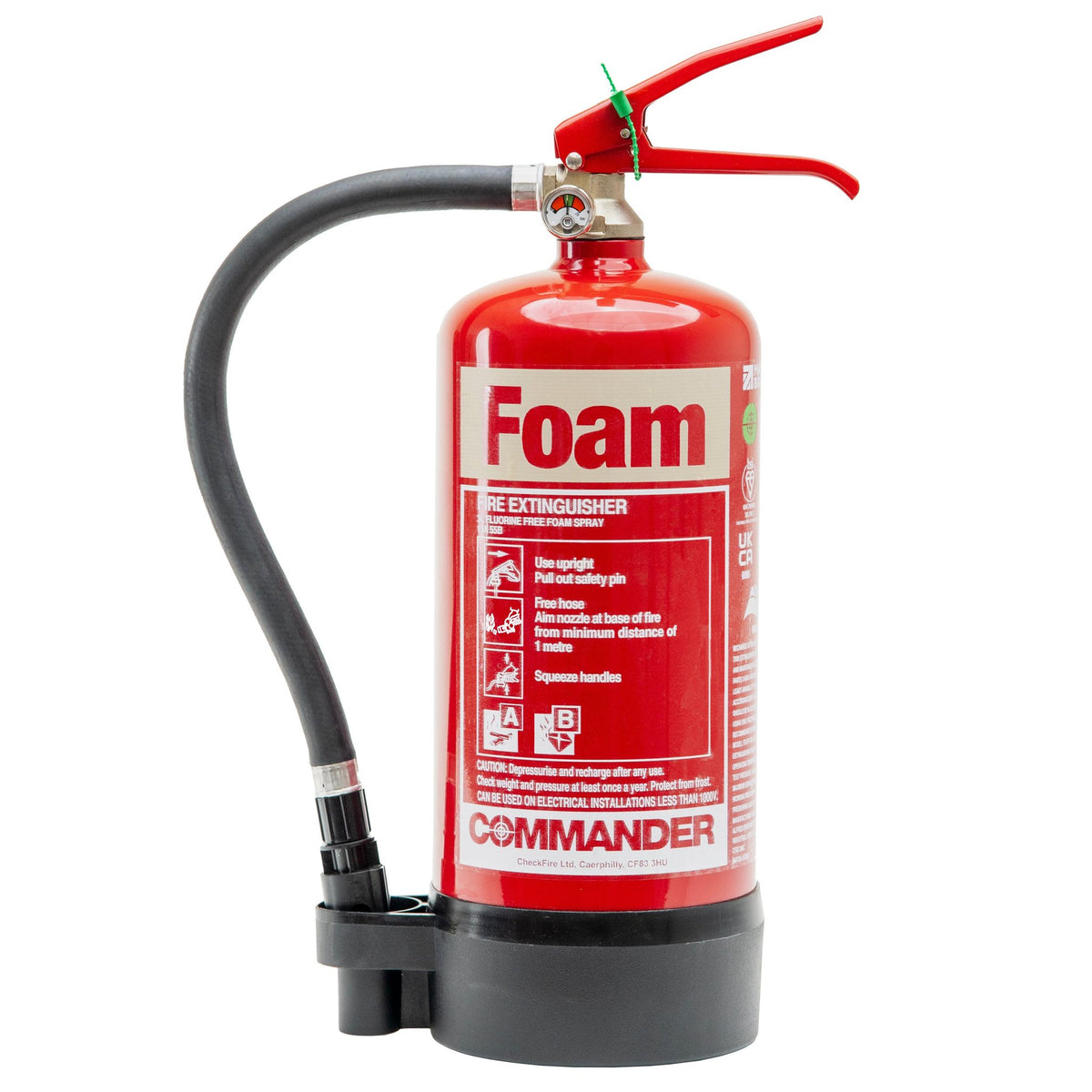
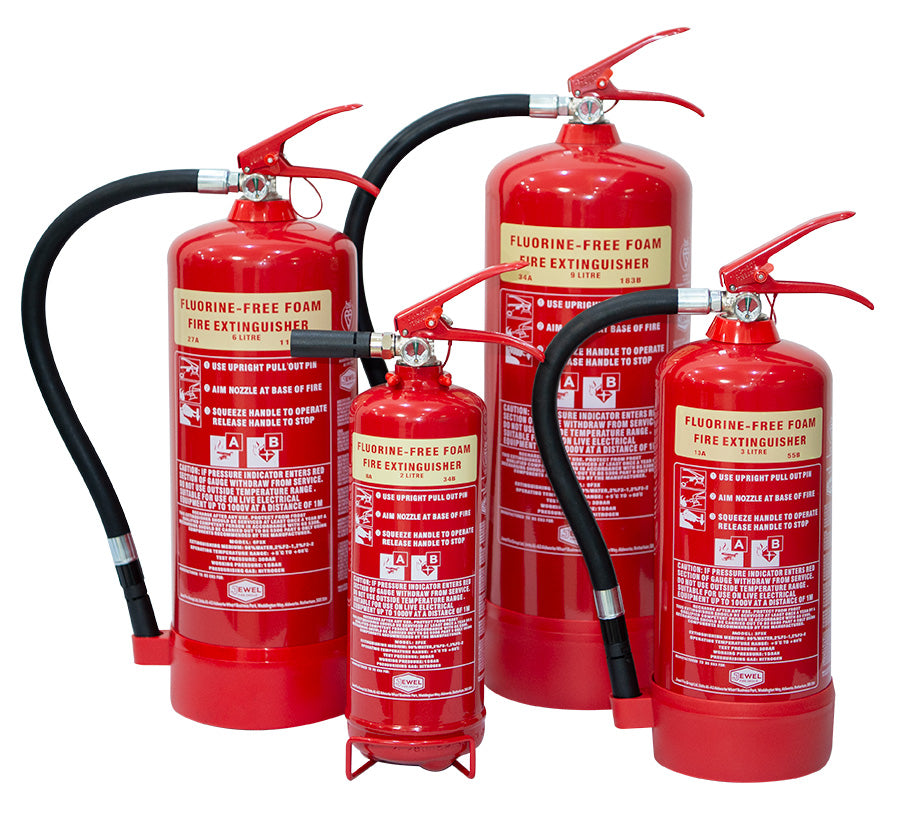
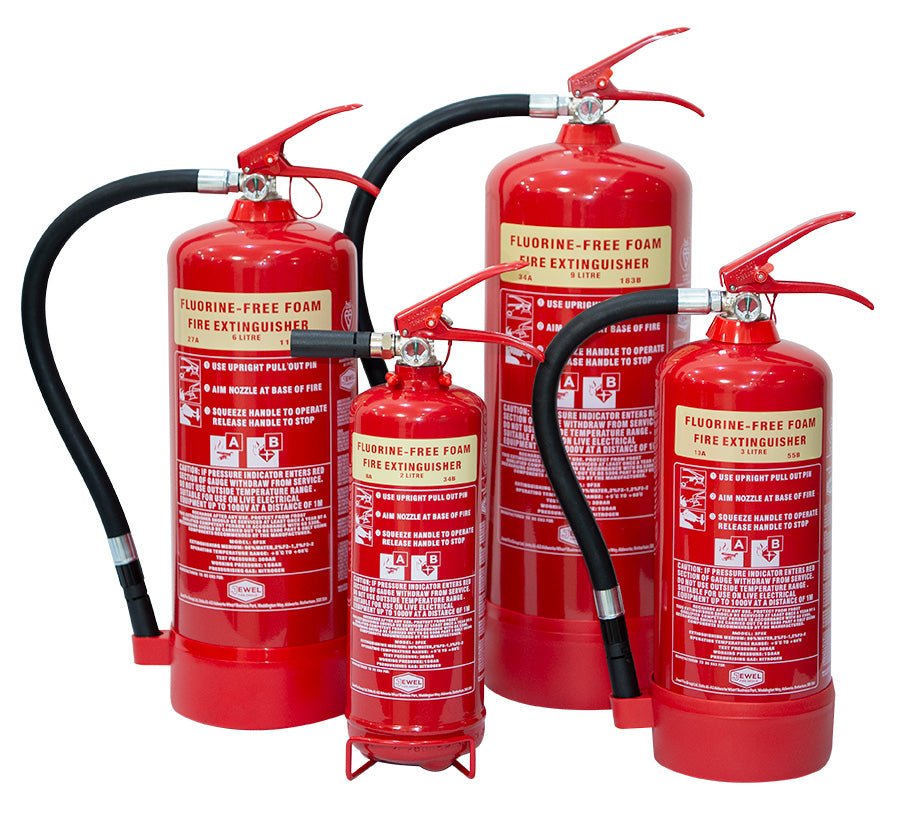
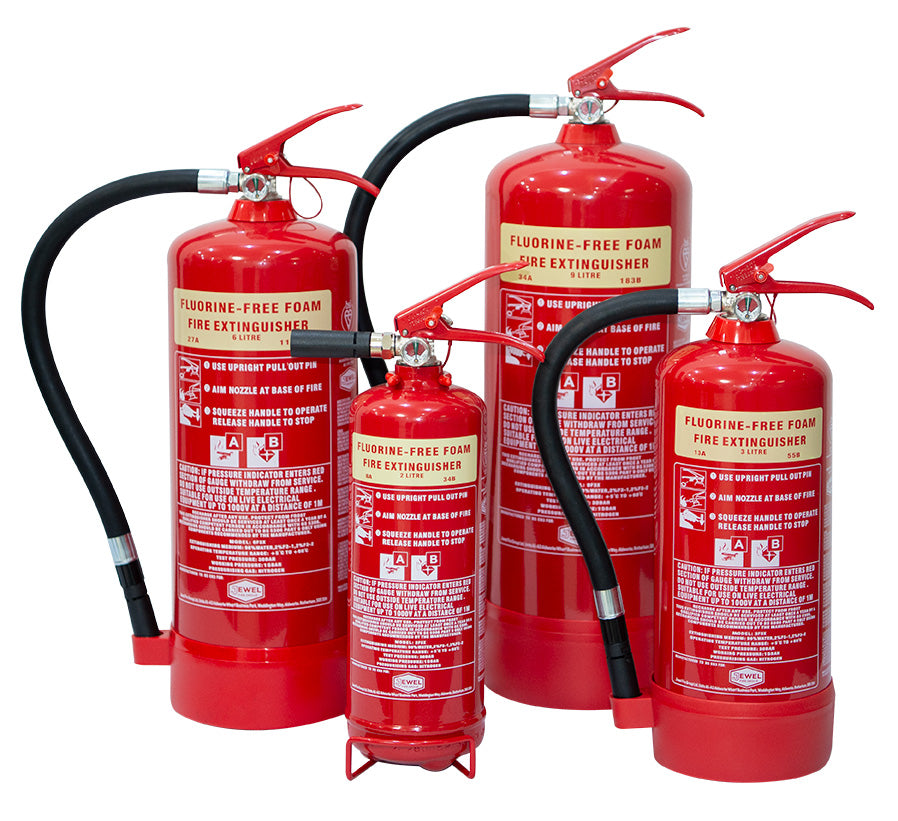
Buy foam fire extinguishers for Class A and Class B fire risks, from compact 2 litre units to 50 and 100 litre wheeled foam units. A foam extinguisher cools burning solids and forms a blanket over burning liquids, so one unit covers the Class A and B risks found in many offices, shops and warehouses. Portable units are made to BS EN 3, with a red body and a cream band or label. Choose AFFF or PFAS-free, fluorine-free foam from Firechief, CheckFire, Jactone, Jewel and Ceasefire.
Foam extinguishers we stock
- Fluorine-free (PFAS-free) foam – Firechief PureSafe 6 litre, the Class A and F rated PureSafe FFF6S, CheckFire Commander EDGE enviroFoam, Jactone EcoPLUS and Ceasefire fluorine-free models.
- AFFF foam – Ceasefire aqueous film-forming foam in 3, 6 and 9 litre sizes (6 litre CF-000806A) and the Jewel 6FHPX high-performance foam.
- Alcohol-resistant foam – CheckFire 6 litre and 9 litre AR foam extinguishers.
- Wheeled and specialist units – the CheckFire 50 litre wheeled AFFF unit, Jewel and Ceasefire 50 and 100 litre units, plus Ceasefire compressed-air foam and foam-mist models.
Shop by brand: Firechief, CheckFire, Jewel, Ceasefire and Jactone. Other types: water, CO2, powder, wet chemical, water mist and lithium-ion battery extinguishers, or all fire extinguishers. Add stands and brackets and covers.
How to choose a foam fire extinguisher
- Fire classes – foam covers Class A fires (solids such as wood, paper and textiles) and Class B fires (flammable liquids such as petrol, diesel and oils).
- Fire rating – compare the rating on the label (for example 13A or 34B), not just the capacity in litres.
- PFAS – AFFF contains fluorinated (PFAS) chemistry. The HSE has concluded that restricting PFAS in firefighting foams under UK REACH is appropriate, so many sites now choose fluorine-free foam. PFAS foam must never be emptied into drains.
- Identification – standard UK extinguishers have a signal red body; foam is identified by a pale cream colour zone.
- Quantity and position – follow your fire risk assessment, and have extinguishers serviced by a competent person in line with BS 5306-3.
For label colours and which type suits which fire, read our fire extinguisher colours and types: where a foam extinguisher fits guide and classes of fire explained. Large foam units are also listed under wheeled fire extinguishers, and you can store portable units in cabinets with ID signs.
Why buy from JEM Systems UK
JEM Systems UK is an authorised distributor of CheckFire and Firechief. Every extinguisher we supply is genuine, brand new and factory sealed, with fast, tracked UK delivery.
Foam fire extinguisher FAQs
What is a foam fire extinguisher used for?
Foam extinguishers are used on Class A fires involving solid materials and Class B fires involving flammable liquids such as petrol, diesel and oils.
What colour is a foam fire extinguisher?
A standard foam extinguisher has a signal red body with a pale cream band or label identifying the foam. Stainless steel and chrome versions are also available.
What should a foam extinguisher not be used on?
Do not use foam on electrical or metal fires. For burning cooking oil and fat (Class F), use a wet chemical extinguisher unless the foam model carries an F rating. For electrical risks, CO2 is the usual choice.
Are AFFF foam extinguishers being phased out?
The EU has adopted a restriction on PFAS in firefighting foams (Regulation (EU) 2025/1988) with transition periods, and the HSE has recommended a similar UK REACH restriction. Fluorine-free foam avoids PFAS altogether.
What is the difference between AFFF and fluorine-free foam?
AFFF (aqueous film-forming foam) uses fluorinated chemistry to form a film over the fuel. Fluorine-free foam uses a different formulation and contains no PFAS. Compare the Class A and B ratings on the label of each model rather than assuming they match.
What sizes do foam fire extinguishers come in?
Portable foam extinguishers are commonly 2, 3, 6 and 9 litres, and wheeled units come in 50 and 100 litres. Your fire risk assessment should confirm the size and number you need.
What is alcohol-resistant foam?
Alcohol-resistant (AR) foam is formulated to work on polar solvents such as alcohols, which break down ordinary foam. Check the product data to see whether a model is suitable for the liquids on your site.
Can a foam extinguisher be used on electrical equipment?
Foam contains water, so it is not recommended for live electrical equipment unless the manufacturer states it is suitable. Use a CO2 extinguisher for electrical risks.