


A heat detector raises a fire alarm when the air temperature at the ceiling reaches a set level or rises unusually fast. It is the right choice for kitchens, plant rooms, car parks and dusty or steamy areas where a smoke detector would cause false alarms, but it responds later than a smoke detector. The response of commercial heat detectors is classified by BS EN 54-5 into classes such as A1, A2, B and C, with an R (rate-of-rise) or S (static) suffix. This guide explains those classes, how heat detectors compare with smoke detectors, and how BS 5839-1 limits their spacing and ceiling height.
How does a heat detector work?
Modern heat detectors use one or more thermistors, electronic components whose resistance changes with temperature. The detector or the control panel uses that reading to decide when to raise an alarm. There are two basic ways of responding:
- Fixed temperature (static): the detector alarms when the air around it reaches a set temperature.
- Rate-of-rise: the detector also alarms when the temperature climbs quickly, even if it has not reached the fixed threshold yet. This gives a faster response to fast-growing fires.
Rate-of-rise detection is not suitable where temperatures normally change quickly, for example near ovens, dishwashers or loading doors, so these areas usually need a fixed-temperature (static) detector.
BS EN 54-5 heat detector classes
BS EN 54-5 is the product standard for point heat detectors. It groups detectors into classes based on the normal room temperature they are designed for and the temperature range at which they must respond:
| Class | Typical application temperature | Maximum application temperature | Static response temperature |
|---|---|---|---|
| A1 | 25°C | 50°C | 54–65°C |
| A2 | 25°C | 50°C | 54–70°C |
| B | 40°C | 65°C | 69–85°C |
| C | 55°C | 80°C | 84–100°C |
| D | 70°C | 95°C | 99–115°C |
| E | 85°C | 110°C | 114–130°C |
| F | 100°C | 125°C | 129–145°C |
| G | 115°C | 140°C | 144–160°C |
A suffix tells you more about the behaviour:
- R means the detector includes a rate-of-rise response.
- S means a static response: the detector will not alarm below its minimum static response temperature, even if the temperature rises quickly.
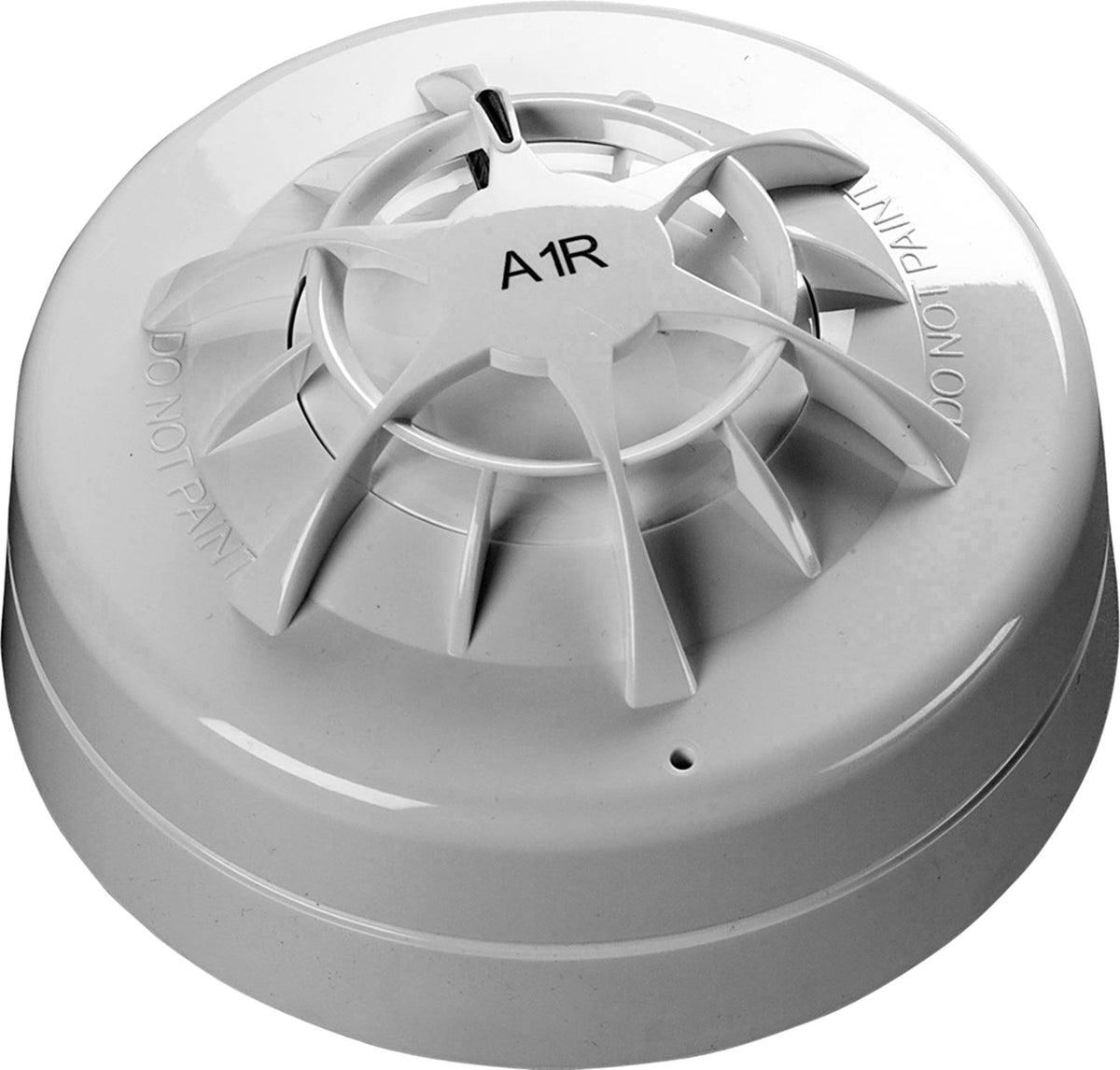
So an A1R detector suits normal rooms and responds to both a set temperature and a fast rise, while a CS detector suits hot environments such as boiler rooms and ignores fast temperature changes below its threshold. Choose a class whose typical application temperature matches the normal temperature of the room.
Heat detector vs smoke detector
- Speed: smoke detectors respond earlier to most fires, especially smouldering fires that produce smoke long before much heat. A heat detector needs the fire to warm the ceiling first.
- False alarms: heat detectors ignore cooking fumes, steam, dust and exhaust, so they are far less prone to unwanted alarms in those areas.
- Where they suit: heat detectors are used in kitchens, plant and boiler rooms, car parks, workshops and other dirty or steamy areas. Escape routes, and areas where early warning matters most, usually need smoke detection. The system category and detector choice should be set by the system designer under BS 5839-1 (see our guide to BS 5839-1 fire alarm categories).
- A middle option: multi-sensor detectors combine optical smoke and heat sensing and can reduce false alarms while keeping a faster response than heat alone.
For homes, see our separate heat alarm guide, which covers domestic heat alarms with built-in sounders.
Spacing and ceiling height (BS 5839-1)
BS 5839-1 gives the general siting rules for point detectors under flat ceilings. For heat detectors, no point in the protected area should be more than 5.3 m horizontally from the nearest detector (compared with 7.5 m for point smoke detectors), so heat detectors are spaced more closely. The standard also limits ceiling heights: as a general rule, about 9 m for Class A1 heat detectors and 6 m for other classes. Sloping ceilings, beams and corridors have their own rules, so check the standard or ask your designer.
Heat detectors we stock
Match the detector to your panel type and protocol. Popular options include:
- Apollo Orbis heat detector (A1R) for conventional systems in normal rooms.
- Apollo Series 65 heat detector (BR), a conventional Class BR detector.
- Apollo XP95 heat detector (A2S), an analogue addressable detector that reports an alarm at 55°C.
- Apollo XP95 heat detector (CS) for hotter areas on XP95 and Discovery loops.
- FireClass 701H conventional rate-of-rise heat detector for FireClass conventional panels.
See the full range of heat detectors.
Testing heat detectors
Heat detectors are tested during routine servicing with a heat tester on an access pole, which warms the detector without a naked flame. Our heat detector testers include cordless heads and kits for this purpose.
Frequently asked questions
What temperature does a heat detector go off at?
It depends on its class. A Class A1 detector must respond between 54°C and 65°C; higher classes respond at higher temperatures. Check the datasheet for the exact figure.
What is the difference between A1R and CS?
A1R suits normal room temperatures and includes a rate-of-rise response. CS suits hot areas (typical application temperature 55°C) and responds only to a fixed temperature.
Can heat detectors replace smoke detectors?
No. They respond later, so they are used where smoke detectors would cause false alarms, not as a general replacement.
How far apart should heat detectors be?
Under BS 5839-1, no point under a flat ceiling should be more than 5.3 m horizontally from a heat detector.
This guide is general information; detector selection and siting should follow BS 5839-1 and the advice of a competent fire alarm designer.