


A carbon monoxide (CO) alarm only protects you if it is in the right place. As a rule, fit one in every room that contains a fuel-burning appliance such as a boiler, gas fire, wood burner or open fire, mounted between 1 and 3 metres from the appliance, either on the ceiling at least 300 mm from any wall or high on a wall above the top of any door or window but not within 150 mm of the ceiling. This guide explains where to put a carbon monoxide detector, where not to put one, what the UK rules say for homes and rented property, and how to choose and test the right alarm.
Why placement matters
Carbon monoxide is a colourless, odourless gas produced when fuels such as gas, oil, coal and wood do not burn completely. You cannot see it or smell it, so an alarm is the only practical way to be warned. An alarm in the wrong place may not react in time.
Where to put a carbon monoxide detector
In the room with the appliance
Fit an alarm in each room that has a fuel-burning appliance: boiler rooms or kitchens with a boiler, living rooms with a gas or solid fuel fire, and rooms with a stove. The guidance in Approved Document J (England) and in manufacturers' instructions gives the same basic positions:
- Distance from the appliance: between 1 m and 3 m measured horizontally from the appliance.
- On a ceiling: at least 300 mm from any wall.
- On a wall: as high as possible and above the height of any door or window, but at least 150 mm below the ceiling.
Bedrooms and rooms a flue passes through
Many people choose to add alarms in bedrooms, especially where a flue runs through a room or loft space, because CO poisoning is most dangerous when people are asleep. Some manufacturers recommend a lower position, near breathing height, for alarms in sleeping rooms. Always follow the instructions for the specific alarm you buy.
Where not to fit a CO alarm
- Inside cupboards, behind curtains or furniture, or anywhere air cannot reach the sensor.
- Directly above a sink, cooker or kettle, where steam and grease can affect it.
- Next to a window, door, extractor fan or air vent, where fresh air dilutes the gas.
- In very damp, dusty or cold areas outside the alarm's stated operating range.
- Further than about 3 m from the appliance, or in a different room from it.
What do the UK rules say?
The rules differ across the UK and are changed from time to time, so check the current guidance for your property. In summary:
- Rented homes in England: the Smoke and Carbon Monoxide Alarm (England) Regulations 2015, as amended in 2022, require private and social landlords to fit a CO alarm in any room used as living accommodation that contains a fixed combustion appliance, other than a gas cooker. Landlords must repair or replace a faulty alarm once they are told about it.
- New appliances in England: Approved Document J of the Building Regulations expects a CO alarm to be fitted in the room when a new or replacement fixed combustion appliance (other than a gas cooker) is installed in a home.
- Scotland: since February 2022, homes need a CO alarm where there is a carbon-fuelled appliance, such as a boiler, fire or heater, or a flue.
- Wales and Northern Ireland: have their own requirements, so check the current guidance before you install.
An alarm is not a substitute for regular servicing. Gas appliances should be checked by a Gas Safe registered engineer, and solid fuel and oil appliances by a competent person.
Choosing a carbon monoxide alarm
For homes, look for an alarm certified to BS EN 50291, the European standard for domestic CO alarms, and check the certification on the product or its datasheet. The main choices are:
- Sealed battery alarms are quick to fit and need no wiring, such as the Wisualarm DHI-HY-GC20D CO alarm with 10-year sealed battery, which has an LCD display.
- Smart alarms send alerts to your phone, such as the X-Sense XC04-WX Wi-Fi CO alarm or the Firehawk CO7B-10Y-APP CO alarm with app, useful for rented and holiday properties.
- Mains-powered multi-sensor alarms combine fire and CO detection, such as the Aico Ei3030, which uses optical, heat and electrochemical CO sensing in one head. These are typically fitted by an electrician as part of a domestic fire alarm system.
Browse the full range of carbon monoxide detectors.
CO fire detectors are different
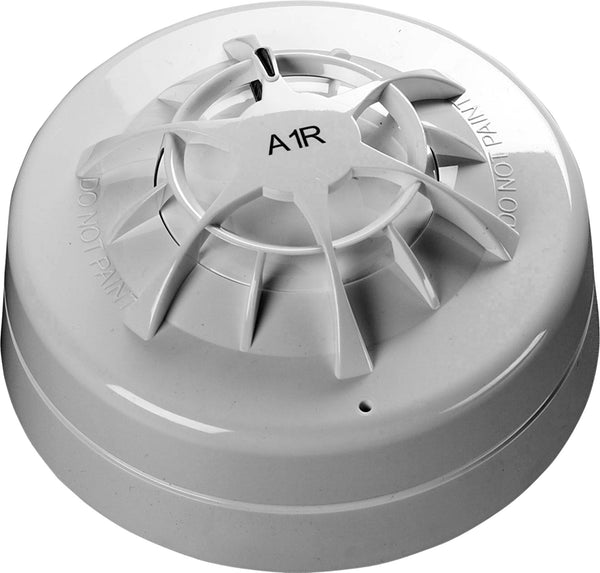
Commercial fire alarm systems can also use CO sensing, but for a different purpose. A detector such as the Apollo 58000-300APO Discovery carbon monoxide detector is a fire detector for addressable systems: it senses the CO given off by smouldering fires and is less prone to false alarms from steam than a smoke detector. It is designed and sited as part of a fire alarm system, not as a replacement for a CO safety alarm next to a boiler.
Testing and replacing
Press the test button regularly to check the sounder, and replace the alarm by the end-of-life date printed on it. Domestic CO alarms typically last 5 to 10 years depending on the model. Engineers servicing CO fire detectors use test gas and access poles from our range of CO detector testers. If you are planning smoke and heat alarms at the same time, see our heat alarm guide and our guide to BS 5839-6 domestic alarm grades.
Frequently asked questions
Should a carbon monoxide detector be high or low?
In the room with the appliance, fit it high: on the ceiling at least 300 mm from walls, or on a wall above door and window height and at least 150 mm below the ceiling. Some manufacturers suggest a lower, breathing-height position in bedrooms, so check the instructions.
How far should a CO alarm be from a boiler?
Between 1 m and 3 m horizontally from the appliance, in the same room.
Do I need a CO alarm in the kitchen with a gas hob?
The rented-home and Building Regulations requirements in England exclude gas cookers. If the kitchen also has a boiler or other fuel-burning appliance, it needs an alarm.
How many carbon monoxide alarms do I need?
At least one in every room with a fuel-burning appliance, and many households add alarms in bedrooms and rooms a flue passes through.
This guide is general information. Always follow the manufacturer's instructions, the current regulations for your part of the UK, and advice from a competent installer.